How to Feel Comfortable in Front of the Camera
-
For most people, being photographed doesn't come naturally. It's not a personal failing or a quirk — it's an almost universal human experience. The moment a camera appears, something shifts. Posture stiffens. Smiles become self-conscious. Eye contact with the lens feels oddly exposing. And suddenly, despite having used your hands confidently your entire life, you have absolutely no idea what to do with them.
You are not alone. This happens to almost everyone, including people who seem entirely at ease in photographs. And it's exactly why I work the way I do.
Why the Camera Changes Everything
There's a reason being photographed feels different from simply being watched. A camera represents a record — a permanent document of this exact moment, this exact version of you, that will exist and be looked at and judged long after the moment has passed. That awareness, even when it operates below the surface, is enough to create a kind of self-monitoring that is the enemy of natural, beautiful photography. The good news is that this feeling is almost entirely a product of stillness and self-focus. And both of those things can be addressed.
Movement Is the Answer
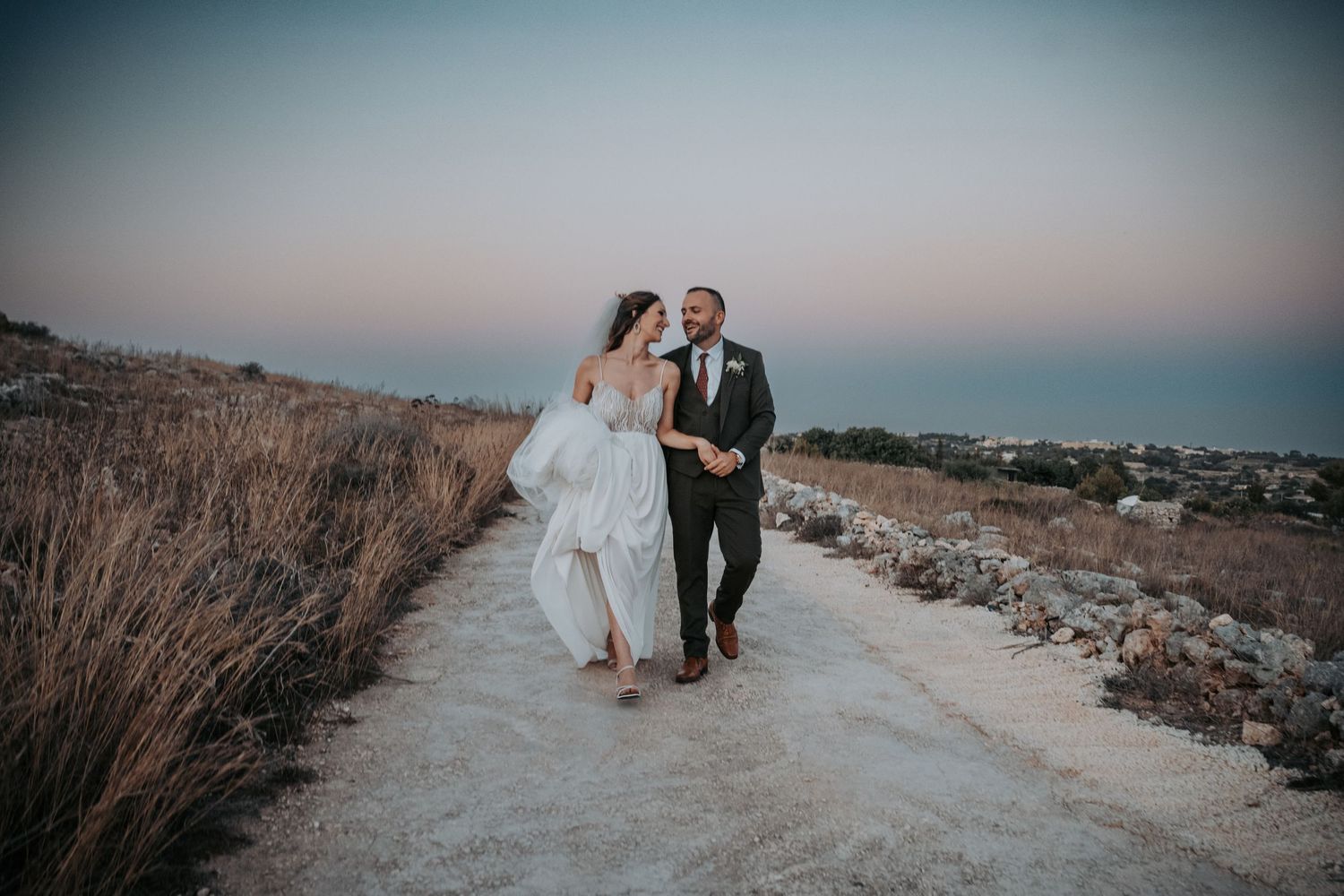
The most effective thing that helps people relax in front of a camera is movement. Not elaborate, choreographed movement — simply doing something, anything, rather than standing still being observed. When you're standing in front of a lens waiting to be photographed, your brain has nothing to do except monitor itself. How do I look? What should my face be doing? Is this the right smile? Am I standing awkwardly? That internal commentary is what produces the stiff posture and the slightly forced expression that nobody wants in their photographs. When you're walking, laughing, talking, or simply moving through a space together, your brain shifts its attention outward. The camera becomes background noise rather than the centre of the experience. Your body language naturally relaxes, your expressions become genuine, and the connection between the two of you — which is the whole point of the photograph — becomes visible rather than buried under self-consciousness. This is why I almost never ask couples to simply stand and look at the camera. The results are rarely the strongest images from the day.
How I Work — Prompts, Not Poses
During portrait sessions I give gentle prompts rather than rigid poses. The distinction matters enormously in practice. A pose tells you where to put every part of your body and asks you to hold it while I take a photograph. A prompt gives you something to do and lets the photograph happen naturally within that movement.
Walk towards me. Walk away from me and don't look back until I ask. Tell each other something you're genuinely looking forward to after the wedding. Hold hands and keep moving — wherever feels natural. These instructions sound almost too simple, but they work because they redirect attention away from the camera and toward each other. They create natural body language, genuine interaction, and real expressions — all of which produce photographs that are infinitely more compelling than anything a formal pose delivers. The couples who end up with the most natural-looking wedding photographs are almost always the ones who stopped trying to look natural and started simply doing something together.
What a Pre-Wedding Shoot Actually Does For You
For couples getting married in Malta, I always recommend a pre-wedding shoot — not primarily for the photographs, though those are genuinely beautiful to have, but for what it does to the dynamic on the wedding day itself. A pre-wedding shoot gives you an hour or two to learn how I work in a low-pressure setting. You discover what the prompts feel like in practice. You find out which movements and interactions produce photographs that feel like you. You get comfortable with the rhythm of a session — the quiet moments, the gentle direction, the pauses — so that none of it feels unfamiliar when it matters most. By the time your wedding day arrives, we already know each other. You already know what to expect from me, and I already know what works for the two of you. That familiarity changes everything. The warming-up period that every portrait session requires — the slightly awkward first ten minutes while everyone finds their footing — is already behind us. We can go straight to the good stuff. Couples who have done a pre-wedding shoot consistently arrive on their wedding day visibly more relaxed around the camera. That ease shows in the photographs from the very beginning of the day, and it compounds across the hours that follow.
Stop Trying to Look Perfect
Here is the most counterintuitive piece of advice I can offer, and also the most genuinely useful: stop trying to look perfect.
The couples whose photographs look the most beautiful are almost always the ones who let go of the idea of performing for the camera and simply focused on each other. They stopped monitoring themselves and started being present. They laughed when something was funny rather than composing their expressions. They moved how they naturally move together rather than how they thought they should move in a photograph.
Perfection in wedding photography is overrated. Realness is not. The photographs that move people — the ones that get framed and kept and shown to grandchildren — are the ones where something true is happening in the frame. Not the technically flawless portraits where everyone looks immaculate and slightly distant. The imperfect, genuine, alive ones. Trust the process. Trust that the discomfort in front of the camera is normal and temporary and shared by almost every couple I've ever photographed. Trust that movement and laughter and simply paying attention to each other will do more for your photographs than any amount of careful posing. And trust that the best version of you in front of a camera is simply — you.