Questions to Ask Your Wedding Photographer Before Booking
-
Booking a wedding photographer is one of the most significant decisions you'll make in the planning process — and one of the least reversible. Unlike a florist or a caterer, where a mistake can often be corrected relatively late in the process, your photographer is booked months or even years in advance, and by the time your wedding day arrives you're entirely in their hands. Getting this decision right matters. The good news is that the right questions, asked upfront, tell you almost everything you need to know. Here's what to ask — and more importantly, what to listen for in the answers.
How many weddings have you photographed?
Experience in wedding photography is not the same as experience in photography generally. Shooting portraits, commercial work, or events develops real skills, but a wedding day is a specific and demanding environment — long hours, unpredictable conditions, emotionally charged moments, no second chances — that requires its own particular experience to navigate well. Ask directly how many weddings they've photographed, and ask to see full galleries from recent ones. Not highlight reels, not portfolio selections — complete galleries from real wedding days. A full gallery shows you things a curated portfolio never will: how they handle a dark church interior, how consistent the quality is across twelve hours of shooting, how they perform during the less glamorous parts of the day as well as the obvious highlights. Any experienced wedding photographer will share full galleries willingly. Hesitation here is worth noting.
Will you be the photographer on the day?
This question matters more than it might seem, particularly when booking through a larger studio or photography company. Some studios take bookings under the lead photographer's name and brand, then send associates or assistants to shoot the actual wedding. The photographer whose work you fell in love with may not be the person who shows up on your day. Ask directly and clearly: will you personally be my photographer on the wedding day? For Malta weddings specifically, where so much depends on knowing the island's venues, light, and locations, the specific person behind the camera matters. Get the answer in writing as part of your contract.
Do you have backup equipment?
Camera equipment fails. Not often, but it happens — and when it does, it happens at the worst possible moment. A professional wedding photographer always carries redundant equipment: at minimum a second camera body and additional lenses, ideally with memory cards that write to two cards simultaneously so no image is ever stored in only one place. Ask about this specifically. A confident, immediate answer — "yes, I always carry two bodies and a full set of backup lenses" — is what you want to hear. Any hesitation, or an answer that suggests they've never really thought about it, tells you something important about how seriously they approach the professional side of their work.
How do you handle difficult lighting conditions?
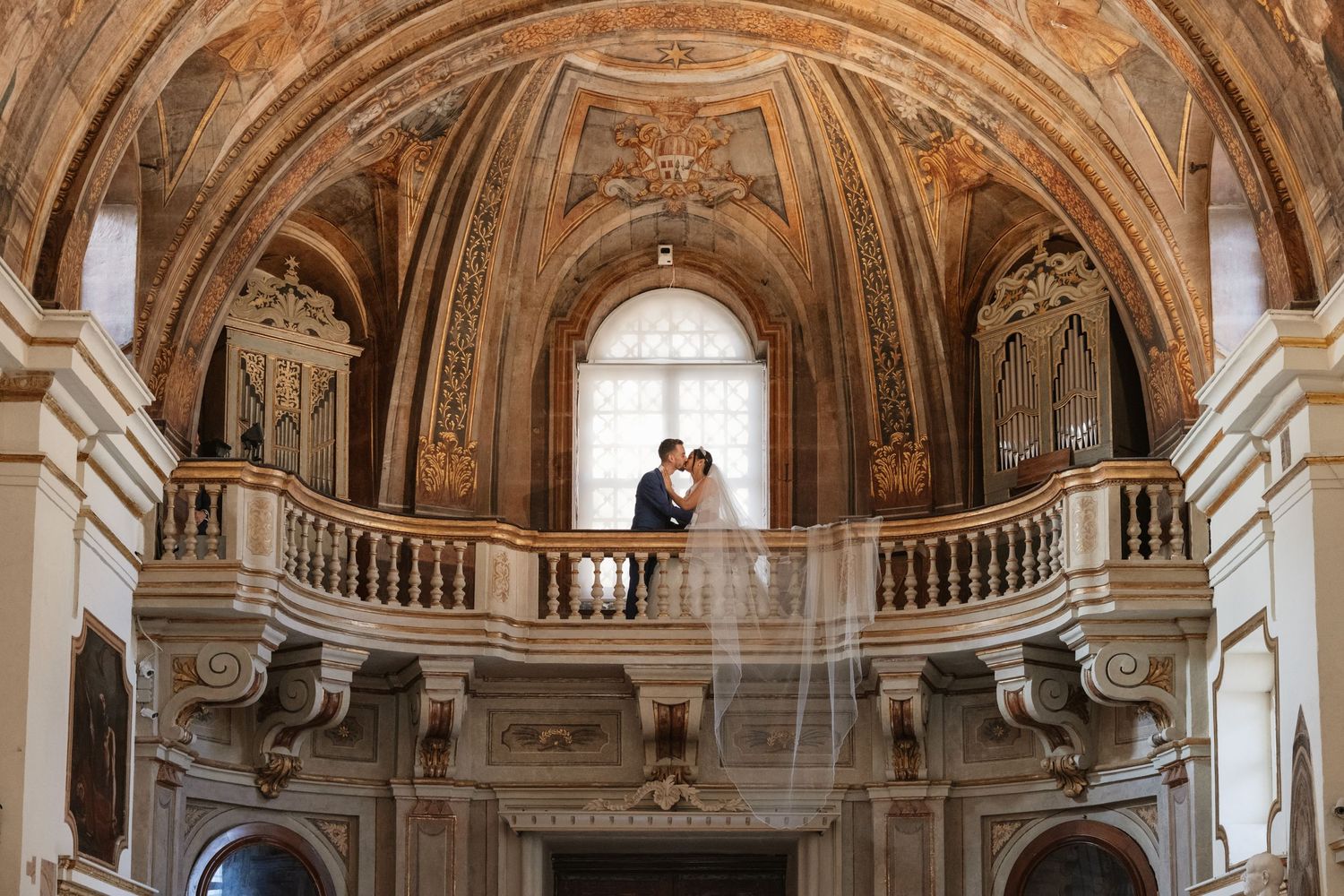
Malta's wedding venues are beautiful, but they are not always easy to photograph in. The interior of a baroque church in Valletta — thick stone walls, high ceilings, small windows — can be genuinely dark and challenging. Outdoor ceremonies in the height of summer produce harsh, unflattering midday light. Evening receptions often involve a mix of artificial lighting that requires careful management. Ask your photographer how they approach these specific challenges. You're not looking for a technical lecture — you're looking for the confidence and specificity that comes from having actually dealt with these situations many times. A photographer who says "dark churches are always tricky but here's how I approach them" is more reassuring than one who says "lighting is never a problem" — because lighting is always a consideration, and a photographer who acknowledges that is one who has thought carefully about how to solve it.
What happens if you're ill on the day?
It's an uncomfortable question to ask, but an essential one. A photographer falling ill on a wedding day is rare — but it happens, and the consequences without a plan in place are severe. A professional should have a clear, specific answer: a trusted colleague or network of photographers they can call on, someone whose work they know and whose professionalism they can vouch for. "I'd sort something out" is not a plan. A named backup arrangement or a clear professional network is. Ask specifically, and listen carefully to how prepared the answer sounds.
How long until we receive our images?
Turnaround times for wedding photography vary considerably — anywhere from four weeks to four months is not unusual across the industry. For most couples, the wait after the wedding day is genuinely difficult, and knowing what to expect helps. Ask for a specific timeframe and agree on it in writing. The typical range for an experienced Malta wedding photographer is four to twelve weeks for a full edited gallery. Anything significantly longer than that warrants a conversation about why, and anything promised in under two weeks for a full day's shooting deserves a question about how thorough the editing process actually is.
Is there a contract?
Always. Without exception. A written contract protects both you and your photographer — it confirms the date, the hours, the deliverables, the payment schedule, and what happens in the event of illness, cancellation, or other unforeseen circumstances. Any professional photographer works with a proper contract as standard. If someone suggests a handshake arrangement or seems reluctant to formalise things in writing, walk away. Read the contract carefully before signing. Understand the cancellation policy in both directions. Make sure everything you've discussed verbally is reflected in the written document.
Do you actually like them?
This is the question that doesn't appear on any official checklist, and it might be the most important one of all. You will spend more time with your photographer on your wedding day than with almost anyone else present. They will be there from the morning preparations to the last dance — eight, ten, sometimes twelve hours of one of the most emotionally significant days of your life. Whether you feel genuinely comfortable around them, whether the conversation flows naturally, whether they make you feel at ease or slightly on edge — all of this matters enormously, and it will show directly in your photographs. Trust your instincts. The right photographer will make you feel relaxed and looked after from the very first conversation. If something feels slightly off — if you feel like you're being interviewed rather than welcomed, or if you leave the meeting slightly unsure of how you feel — keep looking. The technical questions matter. The practical questions matter. But this one, ultimately, matters most.